Relocating a commercial kitchen requires more than just muscle; it requires technical expertise in handling high-value, heavy-duty industrial assets. To choose the right restaurant equipment movers, you must prioritize teams that understand heavy-lift logistics, specialized padding for stainless steel, and the strict health codes governing the Denver food scene. When you partner with a full-service commercial moving team, you aren’t just hiring muscle; you’re hiring logistics experts who understand how to move a RiNo startup or a Cherry Creek kitchen with the same level of precision.
Standard residential movers are great for sofas, but they aren’t equipped for 800-pound Vulcan ranges or sensitive espresso machines. Specialized restaurant equipment moving is about risk management. For example, if an industrial freezer is tilted more than 45 degrees, compressor oil can flow into the cooling lines, causing a “dead on arrival” unit. A specialized team uses hydraulic lift-gates and air-ride suspension to keep your precision-engineered gear level and vibration-free.
Before the first piece of stainless steel leaves your floor, you need a strategy that accounts for both the physical weight of the gear and the logistical requirements of a professional kitchen. Here are some tips for before you hire your Denver restaurant equipment movers.
Ensure your mover has “Cargo Insurance” that specifically covers commercial-grade appliances. A standard “60 cents per pound” policy—common in residential moves—won’t cover the replacement of a $15,000 combi-oven if it’s dropped. Ask for a Certificate of Insurance (COI) that names your business as an additional insured.
Movers are not electricians or plumbers. All gas, water, and electrical lines must be professionally disconnected at least 24 hours prior to the move. Drain all water lines in dishwashers and steam tables to prevent “black water” leaks inside the moving truck, which can ruin other equipment and create a health hazard.
Don’t settle for “hand trucks.” Industrial kitchen gear requires pallet jacks and appliance dollies rated for at least 1,000 lbs. In Denver’s older buildings (like those in LoDo), movers must also use floor-protection runners to prevent high-density weight from cracking historic tile or hardwood floors.
Denver health inspectors require surfaces to be “smooth and easily cleanable.” If your movers use dirty blankets or store your equipment in a dusty warehouse, you may face a failed inspection at your new location. Professional movers use non-marking shrink wrap to create a sterile barrier around food-contact surfaces.
Every hour your kitchen is dark, you are losing money. Coordinate your move for Sunday nights or Monday mornings when most Denver spots are already closed. A “staged” move—where prep tables move first and the hot line moves last—can often keep your delivery business running until the final hours. By scheduling your move during late-night or early-morning windows, you can effectively minimize business downtime, ensuring that your staff is ready to prep for the next day’s service as soon as the equipment is leveled and plugged in.
Types of Restaurant Equipment You’ll Need Help Moving
A commercial kitchen isn’t just a collection of appliances; it’s an inventory of high-value, heavy-metal assets. Identifying these early ensures your movers bring the right tools:
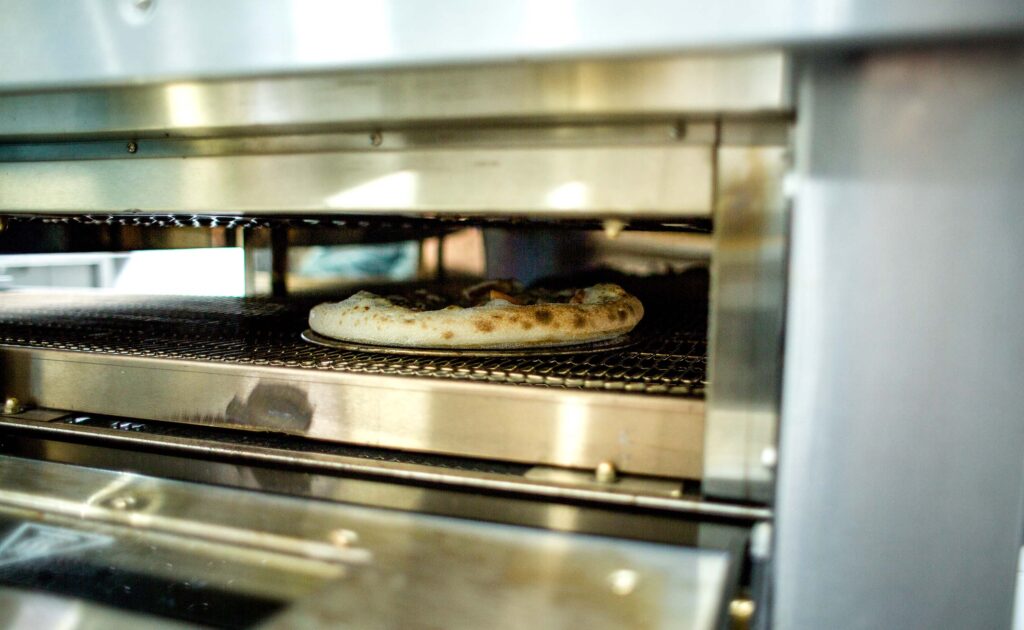
The 5,000-Pound Pizza Problem
While a standard home refrigerator weighs about 250 lbs, a commercial double-deck pizza oven can weigh upwards of 5,000 lbs. That is roughly the same weight as a Ford F-150 concentrated into a few square feet. Moving one requires pallet jacks and specialized floor protection to prevent cracking your kitchen tiles.
Moving a restaurant in the Denver Metro area presents unique hurdles. Between the tight, one-way alleys of LoDo and the strict loading dock reservations required in the Denver Tech Center (DTC), timing is everything. Per 6 CCR 1010-2, any facility moves or significant alteration requires a plan review. Professional restaurant equipment movers know how to work within these timelines, ensuring your equipment is placed exactly where your approved floor plan dictates so you don’t have to pay to move it twice.
The success of your restaurant’s next chapter depends on the safe arrival of your equipment. Don’t gamble your “Grand Opening” on a crew that doesn’t know the difference between a residential stove and a 1,000-lb industrial range. Whether you are upgrading your space or expanding to a second location, EZ Moving provides the specialized equipment and technical knowledge to get you cooking faster.
Ready to get started? Reach out to us or use our moving calculator today.