
Planning an office move can feel like a big step, but it’s also an exciting opportunity for a fresh start! Since it involves more than just boxes and furniture, getting an early plan in place helps keep your team productive, minimizes downtime, and provides everyone with a clear roadmap from the current space to the new one. In this guide, we’re sharing some of our office moving tips to help you stay organized, communicate smoothly, and steer clear of last-minute surprises that can slow things down.
The earlier you start planning an office move, the more control you’ll have over the details that cause most move-day problems. Early planning helps everyone avoid rushed packing, missed vendor deadlines, and IT interruptions that can stall operations. It also gives employees time to understand what’s changing, what’s expected of them, and whom to contact with questions.
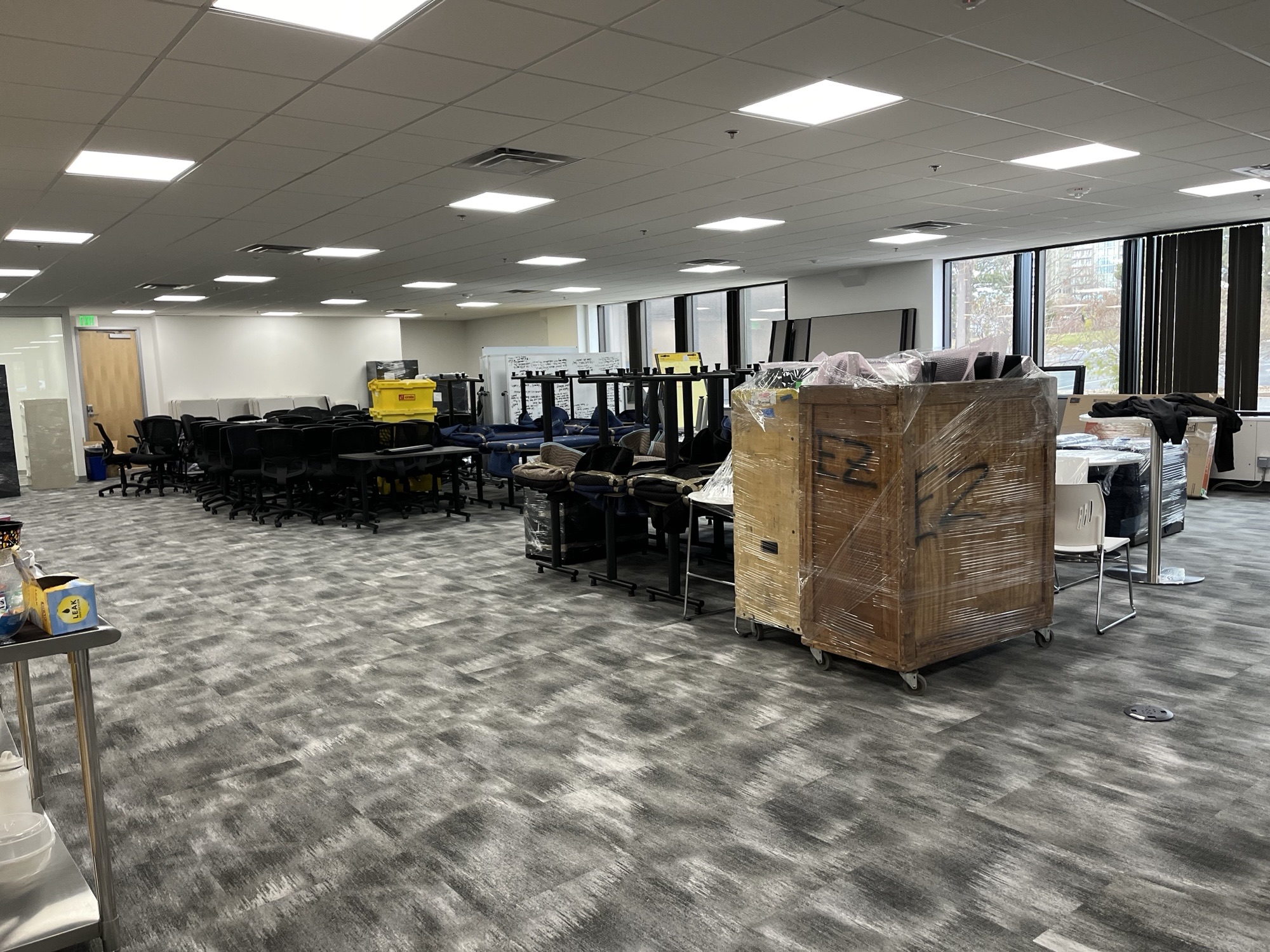
Start with your move date, then work backward. Identify key milestones, including vendor notifications, IT planning, packing start dates, furniture decisions, and final walkthrough deadlines. A realistic timeline should include buffer time for delays, approvals, and building scheduling.
When you’re planning an office move, assign one point person to own the plan and keep decisions moving. Then build a small internal team with representation from operations, IT, facilities, and office management. Clear roles prevent confusion and help keep the final weeks from becoming a “too many cooks” situation.
Office moves run smoother when employees know what to expect and when. Decide how updates will be shared, such as a weekly email, a shared document, or quick team huddles. Include what employees need to do, when personal items should be packed, where to ask questions, and what the move-day schedule looks like.
Communication extends beyond your team. Notify clients, suppliers, and service providers early to avoid missed shipments or billing issues related to the address change and submit a USPS Change of Address form so business mail is forwarded to the new location.
Office moves come with obvious expenses like moving services and packing supplies, but don’t forget the hidden costs. Build a budget that accounts for IT support, new furniture needs, disposal, storage, cleaning, signage, and any building requirements. Tracking costs as you go helps prevent surprises and supports approvals if you need to adjust scope.
Before you pack a single box, take inventory of furniture, equipment, supplies, and files. This is your chance to reduce volume, simplify setup, and avoid paying to move things you no longer need. Decluttering can include donating usable furniture, recycling outdated equipment, and purging supplies that have been sitting untouched for years.
A good inventory also speeds up the move because you know what’s being moved, what’s being replaced, and what needs special handling.
When you’re planning an office move, confidential documents, HR records, financial files, and client information need a clear security plan. Decide what should be shredded, what must be transported securely, and who is authorized to handle it. If you have backup drives, access cards, or physical keys for secure rooms, document where they go and who signs off on them during the transition. For digital security, coordinate with IT to confirm devices are accounted for and that sensitive hardware is tracked from pickup to placement.
IT is often the biggest risk during an office move because it can cause significant downtime. To minimize this, start planning early by outlining the steps to disconnect, transport, and reconnect essential systems. Make sure to confirm internet installation dates, phone system requirements, and any building-specific needs for cabling or access.
If you’re moving servers, workstations, or specialized equipment, plan the sequence and testing schedule so systems can be verified before the team is fully back online. A successful move is not just “everything arrived.” It’s “everything works.”
Packing is essential to organization and can determine success or failure. To improve clarity, organize items by department, label each box clearly with its contents and destination, and establish an easy-to-follow system for all. Employing color codes for departments or floors can further accelerate placement and reduce confusion in the new space.
Encourage employees to pack personal items separately and label them clearly. It keeps the move efficient and prevents personal items from getting mixed into shared supply boxes.
Planning an office move goes much faster when the new space is ready before the first box arrives. Confirm that power, internet, phones, and any access systems are active, then finalize the layout for desks, shared equipment, conference rooms, and storage so everything can be placed correctly the first time. If possible, post a simple floor plan at key entry points so departments and priority areas are easy to find, reducing wandering and speeding up setup.
On day one, prioritize making the business operational rather than searching for cables and desk keys. Outline what must be set up right away, like Wi-Fi, printers, phones, and essential workstations. Designate a small team to perform post-move inspections, verify IT systems are working, and document any issues for later resolution.

Moving out often involves more than clearing desks. Many leases require a clean handoff, which can include removing furniture, clearing storage rooms, handling electronics disposal, and leaving the space in agreed condition for walkthroughs.
Office decommissioning services typically support move-out needs like furniture removal, cubicle breakdown coordination, and clear-out planning so you can meet deadlines without scrambling. If you’re managing larger items or need a structured plan to clear the space, office furniture removal can help simplify the final phase while keeping timelines realistic.
Professional office movers bring structure that’s hard to replicate internally, especially when you’re trying to keep daily operations running. The right team helps with planning, staging, loading flow, and placement so your move stays controlled and predictable.
Experienced movers also understand the logistics that matter in commercial environments, like elevator reservations, loading dock rules, parking restrictions, building access windows, and how to move efficiently without blocking hallways or disrupting neighboring businesses.
When you’re comparing providers, look for movers who can coordinate with your timeline, handle office furniture and equipment safely, and maintain a clear system from pickup to placement. If you’re looking for Denver office movers who understand commercial logistics and local building requirements, EZ Moving’s local commercial relocation team can support a smooth transition.
Planning an office move is a lot to manage, but it doesn’t have to feel overwhelming. With a clear timeline, a communication plan, smart packing systems, and early IT coordination, you can keep your team aligned and your business running through the transition.
At EZ Moving, we help businesses stay organized from the first planning steps through move day and post-move setup. Whether you’re relocating a small office or coordinating a larger commercial transition with decommissioning needs, we’re here to keep the process efficient, protected, and on schedule.