
Moving is stressful enough on its own, and when you have pets, there is an extra layer of concern. Understanding how to move with pets the right way means planning ahead, and ensuring your animals feel as comfortable as possible at every stage of the process. Whether you have a dog, a cat, or both, this guide covers what you need to do before the move, on moving day, and once you arrive at your new home.
Before boxes get stacked and trucks get loaded, your pet needs some preparation, too. While you are busy packing, keeping these animal-specific steps in mind early on will ensure a smoother transition. These steps apply whether you have a dog, a cat, or any other animal, and are some of the most important moving tips for pet owners to keep in mind early on.
Just as planning an office move requires logistical coordination for business assets, relocating a household with animals requires a deeply personal approach. Pet owners need a clear strategy to safeguard their pets’ well-being.
Schedule a checkup before your move. This gives your vet a chance to confirm your pet is healthy enough for the transition, update any vaccinations, and provide copies of medical records you will need if you are switching to a new vet in a different area. If your pet experiences anxiety, this is also a good time to ask about options for keeping them calm on moving day.
Moving involves open doors, unfamiliar people, and a lot of activity all situations where a pet can slip out unnoticed. Before the move, make sure your pet’s ID tags have your current contact information and that their microchip registration is updated with your new address. This is a simple step that is easy to overlook and important to get right before the chaos of moving day begins. If you are coordinating a relocation for an older family member, coordinating these small details alongside specialized senior moving services can help keep the entire family including the pets on track.
Pets pick up on change quickly. Boxes appearing out of nowhere, furniture being rearranged, and the general disruption of packing can cause anxiety well before moving day arrives. Getting your home ready for movers ahead of time also helps keep the environment more organized and less chaotic for your pet throughout the process. Try to keep their feeding times, walks, and playtime as consistent as possible throughout the process. Try to keep their feeding times, walks, and playtime as consistent as possible throughout the process.
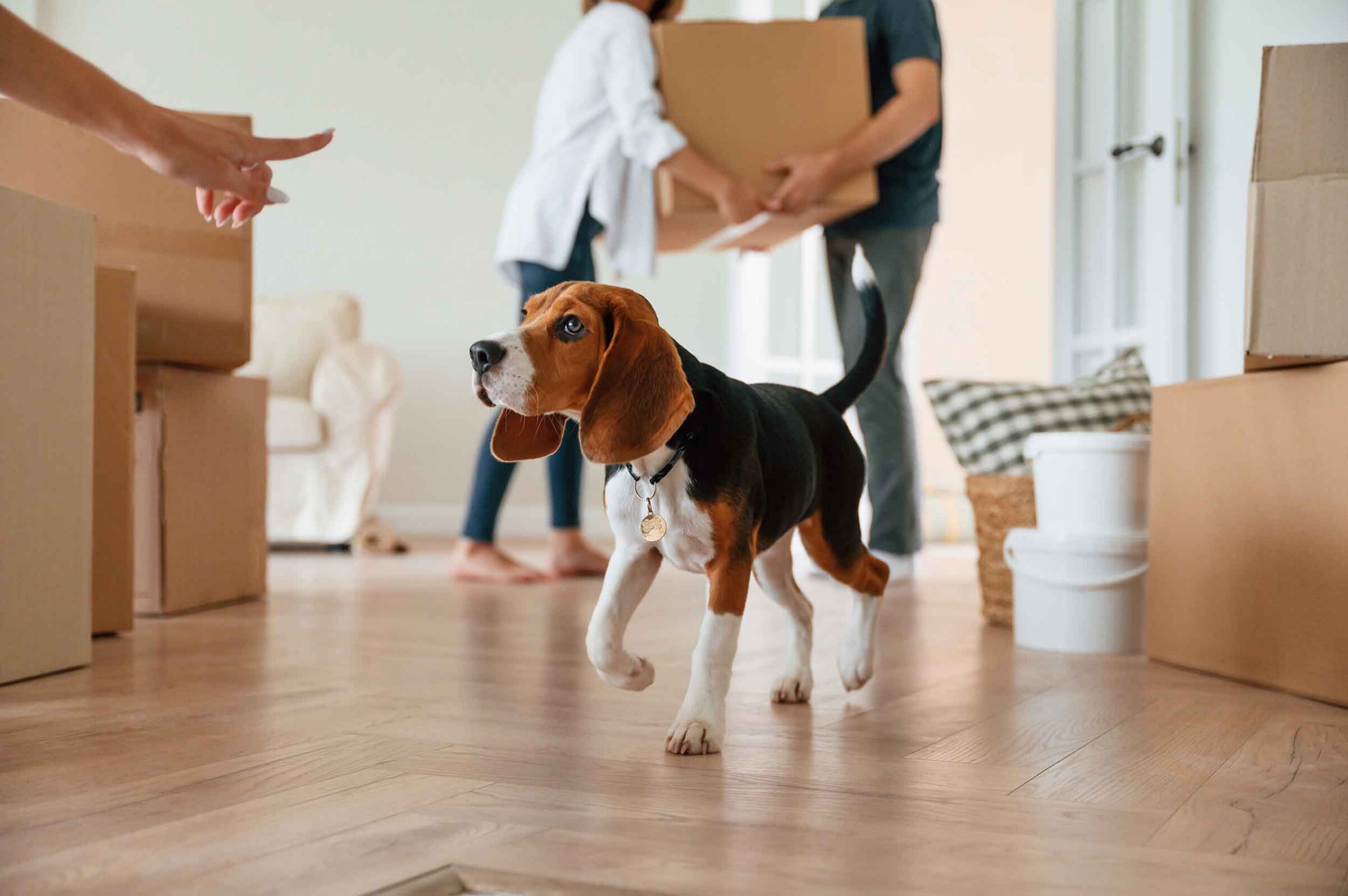
Dogs tend to be especially sensitive to moves. They are territorial by nature and closely tied to routine, which means a new environment can bring out anxiety or behavioral changes you might not expect.
That said, some dogs handle moving better than others, but some become clingy, restless, or vocal. If your dog already shows signs of anxiety during disruptions or bad weather, talk to your vet before the move about what options are available. On moving day itself, keep them in a quiet, secure room away from the activity, or arrange for them to stay with a trusted friend, family member, or at a boarding facility for the day.
One of the best things you can do for a dog after a move is getting them outside and walking the new neighborhood as soon as possible. If you are moving into a multi-family community, relying on professional movers for apartment complexes can free up your time so you can focus entirely on your pet. Familiar scents help dogs orient themselves to new spaces, and a walk gives them a chance to start building a mental map of their new surroundings. Do this before you even finish unpacking if you can.
Dogs thrive on routine. Try to feed them, walk them, and give them playtime at the same times you did before the move. Even if your own schedule is thrown off during the transition, keeping theirs stable goes a long way toward helping them settle in faster.
Cats and dogs react very differently to moving. Where dogs often work through the change by exploring, cats tend to retreat. Understanding that difference helps you set up the right environment from the start.
Cats are deeply territorial and highly sensitive to changes in their environment. A new home means new smells, new sounds, and no familiar territory to fall back on. It is common for cats to hide, stop eating, or act out in the first few days after a move. This is normal behavior and usually resolves with time and patience.
Before you let your cat roam the new space, set up one room with everything they need: a litter box, food, water, a bed, and a few familiar items. Keep them in that room while the move-in chaos is happening.
Do not force your cat to explore. Once the move-in activity has settled down, open the door to their safe room and let them come out when they are ready. Some cats take hours, others take days. Giving them control over the process reduces stress and helps them adjust on their own timeline.
Getting to the new home is only part of knowing how to move with pets. The adjustment period that follows matters just as much, and a little extra attention during this time makes a real difference.
Set up your pet’s space before you start unpacking everything else. Their bed, bowls, toys, and familiar items should be in place as early as possible. Familiar smells help both dogs and cats feel more grounded in an unfamiliar space. Keep the environment calm, limit loud noise where you can, and check in on them regularly during those first two days.
Good signs include eating normally, returning to usual sleep patterns, and showing interest in exploring or interacting with you. Signs that something is off include prolonged hiding, refusing food for more than a day or two, excessive vocalization, or changes in bathroom habits. If any of those persist beyond the first week, a call to your vet is worth it.
The more organized your move is, the easier it is to keep your pet’s experience manageable. Knowing how to move with pets comes down to having a solid plan in place so when moving day arrives, you are not scrambling; you are present for the animals who need it most during the transition.
At EZ Moving, our residential moving services are designed to make the process straightforward and stress-free for the whole household. Whether you need help with local moves in Denver or are looking for full-service moving support from packing to placement, we handle the heavy lifting so you can focus on getting your pets settled in. Ready to get started? Contact EZ Moving today for a free quote.
Ready to get started? Contact EZ Moving today for a free quote.